
Businesses often bring in a new CRM expecting it to fix things like messy pipelines, patchy follow-up, and forecasts nobody trusts. What a good CRM tends to do first is show, clearly and sometimes uncomfortably, how the business actually operates.
Those patterns were usually there before the system arrived, and the CRM makes them harder to ignore. The value comes from treating what it surfaces as information to act on, rather than as a verdict on the software.
What a CRM Makes Visible
Once a CRM is genuinely in use, you start to see:
🔍 Where the sales process actually breaks, including where deals stall, where follow-up drops off, and where qualification is weak
📊 Whether the forecast reflects reality, as the gap between what’s predicted and what closes becomes measurable
👥 How consistently the team actually sells, with differences between reps showing up in the data rather than only in anecdote
🏚️ Which accounts are being neglected, where relationships have drifted without the account owner having a clear view of it
💷 Where commercial discipline slips, in discounting patterns, margin eroding on repeat business, and accounts that cost more to serve than they return
These problems existed before the CRM arrived, and the system gives you the evidence to act on them.
What the System Surfaces but Can’t Solve Alone
A CRM can show a problem with real clarity, but the fix depends on what kind of problem it is. Some need a system fix, such as a stage that needs redefining or a field nobody uses. Others need a leadership decision:
- A broken sales process needs redesigning rather than closer tracking
- Inconsistent selling needs coaching and clear standards, which the data informs and managers deliver
- A culture where follow-ups slip without consequence shows up in the data, and changing it takes managers holding people to clear expectations in one-to-ones
- Neglected accounts get surfaced by the system and re-engaged by the people who own them
How to Use the CRM as a Diagnostic
The practical step is a regular review, monthly or quarterly, where leadership looks at what the data is showing and decides what to do about each issue:
- Look for patterns over time rather than single numbers, such as the same stage stalling quarter after quarter or the forecast missing in the same direction
- Note where each issue shows up, whether that’s stage conversion, forecast against actual, or activity by account, so it can be checked again at the next review
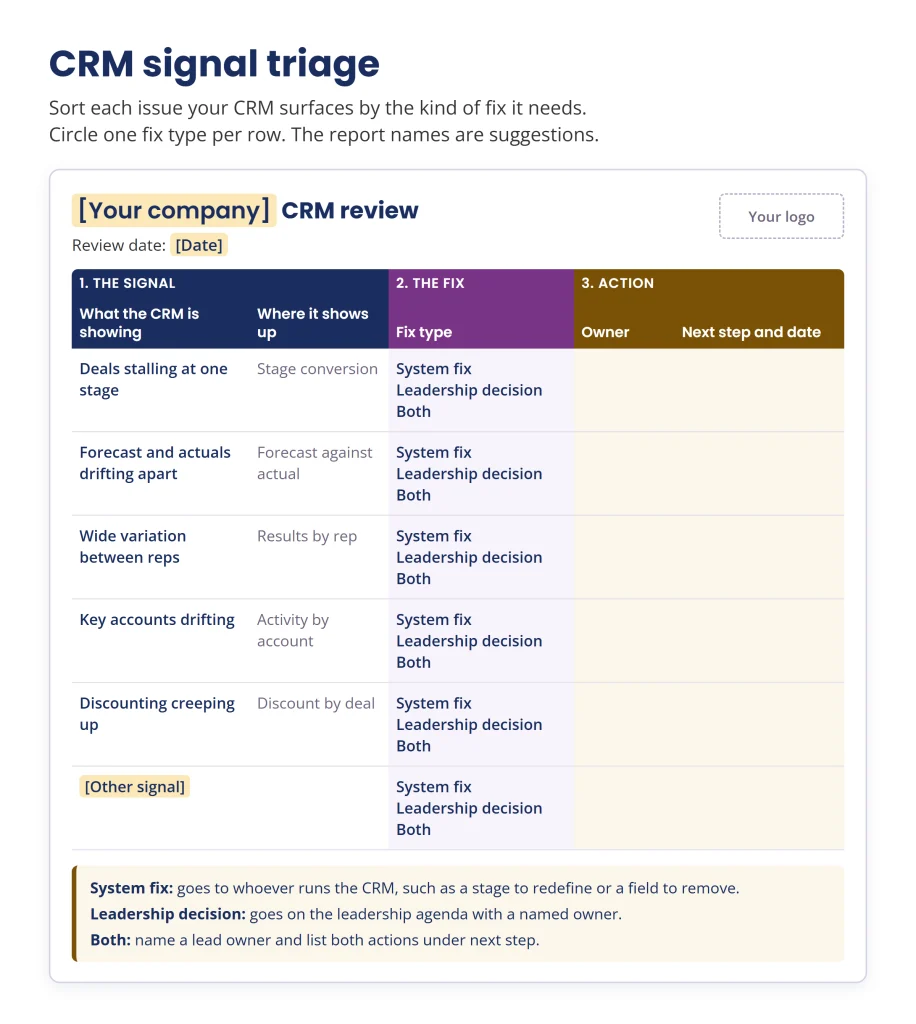
- Decide what kind of fix it needs: a system fix, a leadership decision, or both
- Give it an owner and a next step, so it gets acted on rather than explained away
Used this way, what the CRM shows becomes a standing item on the leadership agenda, and a one-page triage sheet is enough to run the review.
What Well-Run Businesses Do With What They See
When a CRM surfaces an uncomfortable truth, the easy response is to decide that the system isn’t working, the data must be wrong, or the tool doesn’t fit. Sometimes that’s fair, but it can also be a way of avoiding what the data shows. The businesses that get real value confirm the data is sound, then put each issue on the agenda with an owner.
A good implementation partner helps on both sides, setting the system up so the picture is clear and helping leadership interpret what it shows and decide what to do about it. The CRM provides the visibility, and the results come from what the business does with it.
Book a demo with the BuddyCRM team to look at what your CRM is telling you. We can review where your pipeline and forecast data point to recurring problems, which of those are system fixes, and which need a leadership decision.